
Reducing the calories in a cake doesn’t mean removing pleasure. The real lever is understanding how each ingredient affects texture, taste, and satiety. Baking compatible with a weight loss goal relies on precise technical choices, not on a list of prohibitions.
Added sugars and total sugars: a confusion that changes everything in light baking
Have you ever read “no added sugars” on a packet of cookies thinking you had a weight loss ally? This label only indicates that no mono- or disaccharides were incorporated during production. It says nothing about the amount of naturally occurring sugars in the fruits or dairy products in the recipe.
The regulatory distinction is clear. For a solid food, “no sugars” corresponds to a maximum of 0.5 g per 100 g. The label “low sugar” allows up to 5 g per 100 g. These two formulations are not interchangeable, and the caloric difference between the two can be significant in a slice of cake.
In homemade cooking, the “of which sugars” line in the nutritional declaration adds natural sugars and added sugars without distinguishing between them. A dessert made with “no added sugars” applesauce still contains the fructose from the fruit. Exploring recipes designed for weight loss on Idées Gâteaux helps identify combinations where this load of natural sugars remains controlled.
The useful reflex: read the “of which sugars” line rather than the front claim. It is the only reliable data for comparing two recipes or two products.

Texture and volume: the hidden role of fibers and proteins in a light dessert
When sugar or butter is removed, the cake often loses its moistness and structure. Most substitution tips stop there, but the real question is: how to compensate for this loss of structure without adding unnecessary calories?
Fibers as a texture agent
Oat bran, almond flour, or chia seeds absorb moisture and swell during cooking. This mechanism gives volume to the batter. The result: a visually generous slice for a reduced caloric intake.
Chia seeds, in particular, form a gel when in contact with liquid. Mixed with plant milk for about ten minutes, they create a base that replaces part of the eggs in a muffin or cake. The texture remains creamy without resorting to additional butter.
Proteins for satiety
A protein-rich dessert keeps hunger at bay longer than a dessert that is solely carbohydrate-based. Cottage cheese, plain Greek yogurt, or silken tofu provide this protein density while serving as a binder in the batter.
A classic chocolate mousse uses cream and sugar. Replace the cream with whipped cottage cheese and reduce the sugar by half: the chocolate remains the dominant flavor, but the nutritional profile changes radically.
Delicious recipes with low caloric load: three bases to master
Instead of listing dozens of desserts, let’s focus on three recipe structures. Each works as an adaptable template based on seasonal fruits and your preferences.
- Express fruit and chia mousse: mix chia seeds with almond milk and a blended fruit (raspberry, mango, passion fruit). Let it set in the refrigerator. The texture resembles a pudding, with no cooking or added sugar.
- Steamed chocolate and cottage cheese cake: cottage cheese replaces butter, and high-cocoa dark chocolate provides the bitterness that allows for reduced sugar. Steaming retains moisture that the oven sometimes dries out.
- Roasted fruit salad with spices: peaches, apricots, or pears roasted with cinnamon and a hint of vanilla. The natural caramelization of the fruit’s sugars produces an intense flavor. Served warm with a spoonful of Greek yogurt, it’s a light and satisfying evening dessert.
These three bases cover different cravings: creamy, melting, fruity. The idea is to alternate them to avoid monotony, the primary cause of giving up on a dietary rebalancing.
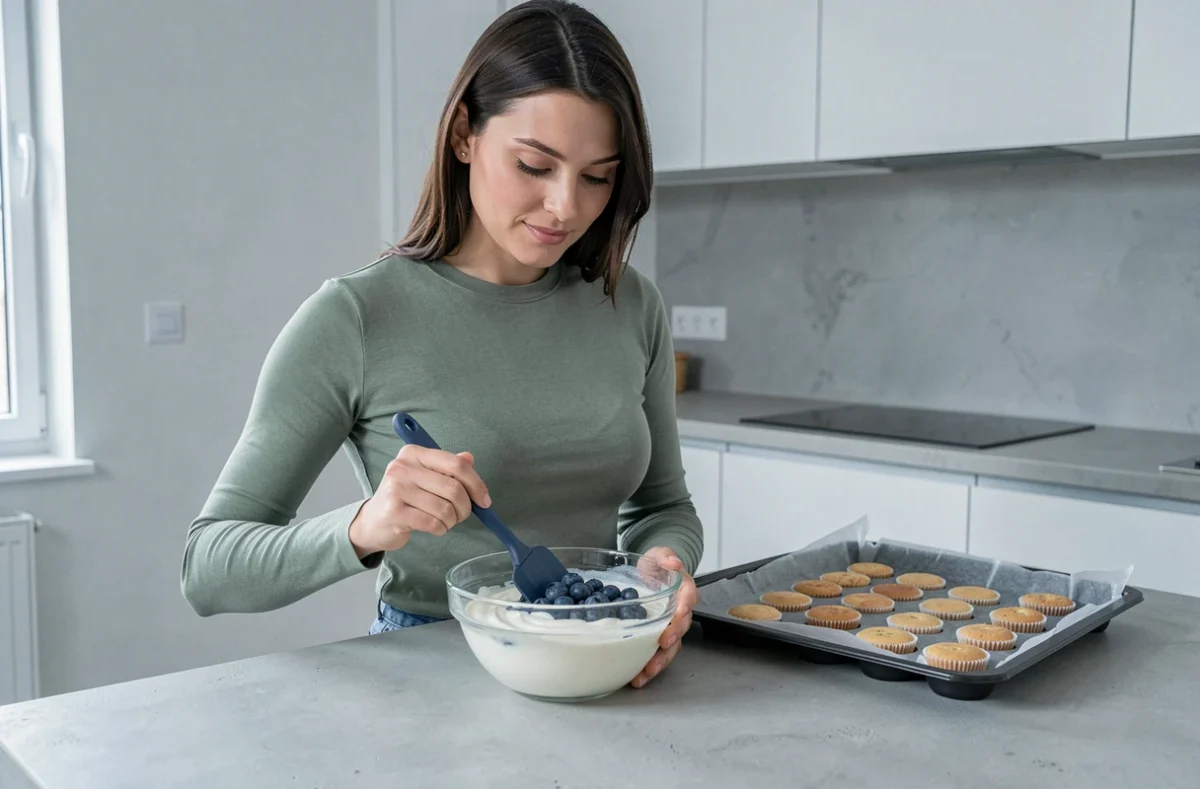
Light baking: the traps of products labeled “light”
A product labeled “light” or “reduced fat” is not necessarily a good choice for homemade baking. Why? Because the reduction of one nutrient (sugar, fat) is often compensated by another less visible ingredient: modified starch, flavorings, thickeners.
Reducing sugar in an industrial product does not guarantee a better overall nutritional profile. The most reliable recommendation remains to check the complete nutritional declaration rather than relying on claims on the packaging.
In homemade baking, you control each ingredient. A cake made with applesauce, dark chocolate, and cottage cheese will always be more transparent, nutritionally speaking, than a ready-to-use “diet special” mix.
Three reflexes before buying a “weight loss” ingredient
Check the number of additives on the label. Compare the “of which sugars” line with the standard equivalent. Ask yourself if a raw ingredient (fresh fruit, pure cocoa, plain yogurt) could do the same job for less money and with a shorter ingredient list.
Baking compatible with a weight loss goal does not rely on miracle products. It relies on simple ingredients, measured precisely, and on understanding what each component truly brings to the recipe and to your body. The pleasure of dessert remains intact, as long as you know what you’re putting in the mold.