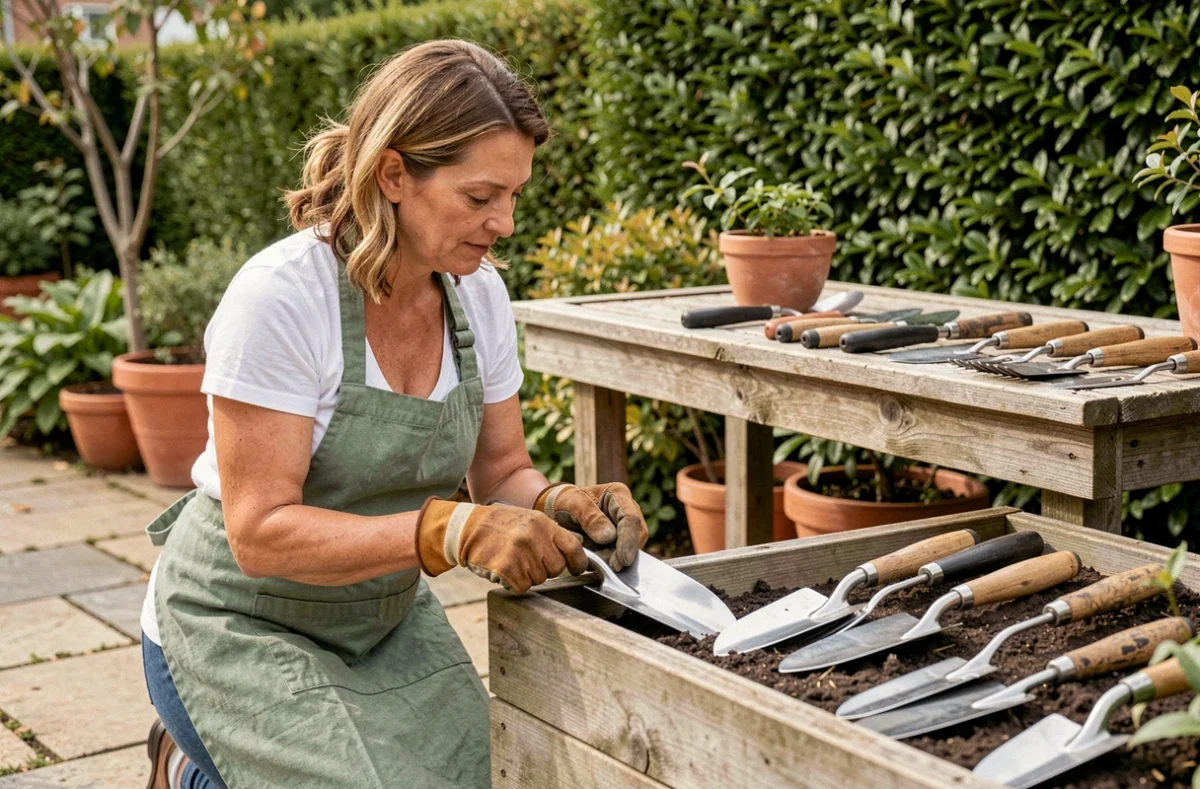
The choice of garden equipment is no longer just a matter of style or budget. So-called “performance” materials, the modularity of configurations, and prolonged use over four seasons have shifted the selection criteria towards technical parameters that most consumer guides do not address.
Ultra-compact surfaces and technical fabrics: performance materials for garden furniture
Traditional materials (wicker, powder-coated steel, solid teak) are still present, but a new category is emerging. Ultra-compact surfaces resist UV rays, scratches, and heat far beyond what tempered glass or standard composite wood tops offer. We recommend checking the manufacturer’s technical sheet on three points: thermal shock resistance, UV rating, and tolerance to common chemical agents (sunscreen, degreaser).
On the seating side, outdoor fabrics have undergone the same shift. Mass-dyed acrylic canvases and treated hydrophobic olefin fibers offer color retention over several seasons, whereas standard polyester fades after one summer. For a coherent selection of pieces designed with this logic, the equipment on Tradition Jardin provides a solid starting point.
Certified wood remains relevant as long as its origin is documented. The traceability of the material determines its actual durability: locally sourced untreated black locust outperforms uncertified imported teak in both mechanical resistance and carbon footprint.
Modularity and reconfigurable setups: choosing equipment that adapts to your uses
An outdoor sectional sofa is not a marketing gimmick. It is the technical answer to a concrete problem: the same space must transition from dining for six to relaxing for two, sometimes in the same evening.
We observe that well-designed modular configurations rely on three verifiable criteria:
- A tool-free assembly system (stainless steel clips, self-locking tenons) that allows reconfiguration in under two minutes without damaging the structure
- A weight per module that is manageable by a single person, which excludes certain ranges made of fiber-reinforced concrete or reconstituted stone
- A dimensional compatibility between modules from different series by the same manufacturer, a rarely documented but crucial point for completing a set over time
Integrated mobile tables with extension leaves complement this logic. Prefer butterfly or drawer mechanisms over separate extensions that need to be stored, which inevitably end up at the back of a garden shed.
Four-season garden equipment: weather resistance and prolonged comfort
The shift towards prolonged year-round use changes the hierarchy of selection criteria. Furniture designed solely for summer use is no longer suitable when one wishes to enjoy a terrace in the fall or spring under cover.
Weather resistance is measured on two distinct axes. The first is structural: corrosion of joints, deformation under repeated freeze-thaw cycles, swelling of fibers in case of water saturation. Extruded aluminum and autoclaved black locust perform significantly better than painted steel or class 3 treated pine.
The second axis concerns thermal comfort. A bare metal seat is unusable in cool weather without a cushion. Closed-cell foams of sufficient density retain their elasticity even in low temperatures, unlike cheap foams that harden below ten degrees. Demand a foam density higher than that of low-end indoor cushions if you plan to use it off-season.
Covers and protections: a frequently under-dimensioned aspect
The protective covers provided by manufacturers rarely cover the entire configuration. Check for the presence of vents to avoid trapped condensation, which generates more mold than direct rain. Polyester-coated fabrics with thermally welded seams offer significantly better waterproofing than simply sewn models.
Repairability and lifespan: the forgotten criteria for choosing outdoor equipment
Durability is not limited to the material’s resistance. It includes the ability to repair or replace an isolated component without having to buy the entire set. This is an angle that product sheets almost systematically overlook.
Before purchasing, we recommend checking three concrete points:
- The availability of spare parts (pads, clips, screws, slats) for at least five years after the product launch
- The possibility to order cushions or replacement fabrics in exact dimensions, not “compatible”
- The existence of a customer service capable of providing an assembly diagram, which indicates a structured manufacturer
A repairable piece of equipment costs less over ten years than disposable furniture replaced every three summers. Brands that document the origin of their materials and publish their maintenance sheets are part of a growing traceability logic, driven by European regulatory developments on product compliance.
Certified wood and recycled content
The use of recycled materials (refined aluminum, regenerated HDPE plastic) is increasing in mid-range products. These materials do not involve any mechanical compromise as long as the recycling process is documented. Recycled aluminum retains its structural properties identically, which is not always the case with composites made from reconditioned plant fibers.
The choice of high-performance garden equipment relies on precise technical arbitrations: high-resistance materials, real modularity, durability across four seasons, and repair capability. These criteria weigh more heavily than the style presented in catalogs, and they ultimately determine satisfaction over time.