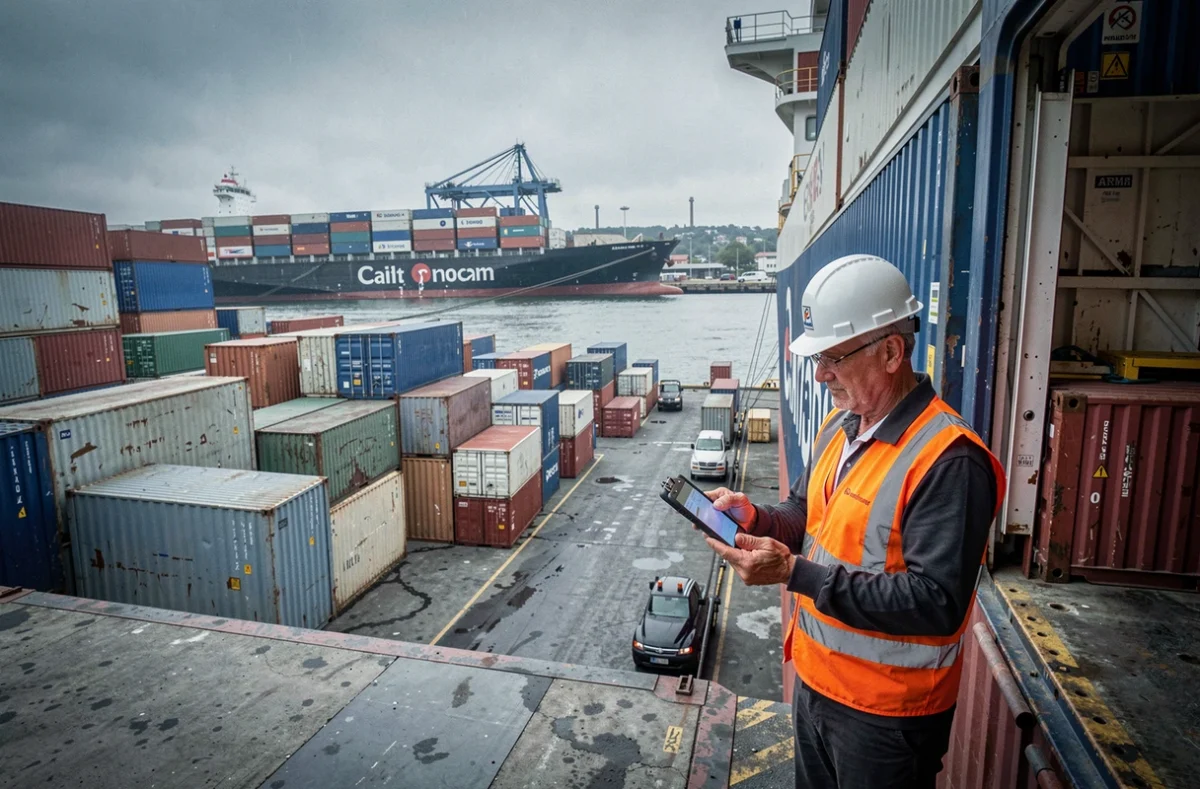
Trade accounts for about one-third of Canada’s revenues and nearly two-thirds of its gross domestic product. With a population of just over 40 million, the country cannot rely on its domestic market alone to sustain growth. International trade shapes employment, consumer prices and Canadian businesses’ ability to reach critical mass.
Sectoral and geographic concentration in Canadian trade
Canada’s three largest trading partners are the United States, the European Union and China. The United States remains by far its largest export market. This reality has shaped Canadian trade policy for decades.
An IRPP report notes that Canadian trade remains concentrated not only in the U.S. market, but also in a limited number of sectors. Energy, natural resources and the automotive industry account for a disproportionate share of exports. When a tariff hits one of these sectors, the effects are felt across entire regions.
Over time, the composition of exports has evolved. Canadian settlers depended on timber and grain. In the twentieth century, exports shifted toward services, manufactured goods and commodities such as oil and metals. Understanding international trade in Canada means recognizing just how much this sectoral concentration shapes national prosperity.

Diversifying export markets: real benefits and costs
Since the 1980s, Canada has signed free trade agreements with dozens of countries. The stated goal is to reduce dependence on a single trading partner and give Canadian businesses access to new markets.
Diversification does not happen simply by signing an agreement. The IRPP identifies practical barriers that hold businesses back:
- Insufficient trade infrastructure, particularly ports and logistics, which limits shipping capacity to Asia and Europe.
- Language and cultural barriers that make it harder to develop business in markets such as the Indo-Pacific, despite its being a target of the federal strategy.
- The regulatory complexity of foreign markets, where health, environmental and customs standards differ significantly from those in North America.
- Many Canadian businesses lack the scale and resources to absorb the costs of entering a new market.
The IRPP also notes that diversifying markets and supply chains can strengthen resilience, but come at an economic cost, particularly if alternative markets prove less profitable than the U.S. market. An Alberta company that redirects its oil sales to Asia faces shipping costs that are far higher than those of a cross-border pipeline.
Tariffs and trade tensions: varying effects across regions
Trade relations between Canada and the United States have shifted sharply in recent years. New tariffs have been imposed, forcing Canadian businesses to adapt quickly.
Trade tensions affect sectors and regions differently. A tariff on steel does not affect industrial Ontario in the same way as it does the Maritime provinces, where fishing is a major industry.
For consumers, trade helps keep prices lower because each country produces what it does best. When tariffs are added, this mechanism breaks down. Imported goods become more expensive, and Canadian businesses that rely on U.S. components face higher production costs.
New risks associated with expanding into Europe
Selling more overseas also changes businesses’ risk profiles. An article in Canadian Underwriter notes that shipping by sea exposes businesses to climate, storage and regulatory compliance risks that were not as significant in overland trade with the United States. Insurers must adapt their coverage, and businesses must factor these costs into their profitability calculations.

International trade and employment in Canada: what agreements change in practice
International trade supports nearly one in six jobs in Canada. Exports give businesses access to a much larger customer base than the country’s 40 million consumers, which boosts demand and creates jobs in export-oriented sectors.
Imports play a complementary role. They provide access to goods and services that Canada does not produce, or does not produce in sufficient quantities. They also create competition, encouraging Canadian businesses to remain competitive on price and quality.
Canadian trade policy balances two competing priorities. On the one hand, it seeks to open markets by signing more agreements. On the other, it protects certain sensitive sectors through targeted measures. The 2026 review of the Canada-United States-Mexico Agreement (CUSMA/ACEUM) illustrates this tension: renegotiating the terms of an existing agreement can either strengthen or disrupt supply chains that are already in place.
Canada’s prosperity remains tied to its ability to sell beyond its borders. Available data show that diversification is progressing, but new sales outside the United States have yet to resolve the country’s structural dependence. The practical barriers businesses face, from inadequate infrastructure to regulatory hurdles, are a reminder that trade policy is about more than agreements signed between governments.