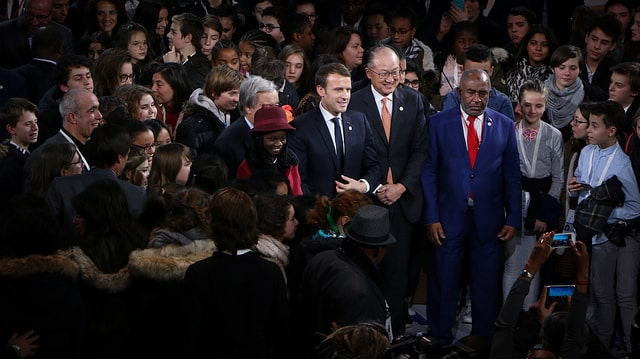
The international climate summit desired by the French president took place in Paris on December 12. B was there to follow this One Planet summit and tell you what happened there. So, was the summit concrete a month after COP23 or a presidential communication operation? We will tell you everything!
A summit sought by one man
A small step back to start. The One Planet Summit was announced by Emmanuel Macron on July 8. This announcement followed Donald Trump’s decision to withdraw the United States from the Paris Agreement a month earlier. The French president’s goal was clear: to take the lead on climate issues and reinforce the compromise reached two years ago in Paris. The One Planet Summit was supposed to be a summit of concrete actions and, above all, green finance. President Macron warned that he wanted financial commitments from all stakeholders to confirm the positive momentum of COP21. So, is the deal done?
Small dishes in a big way for the climate
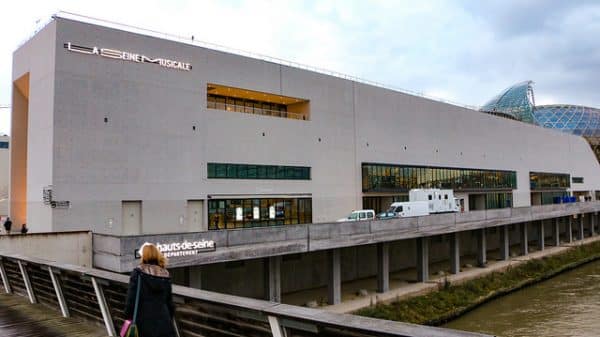
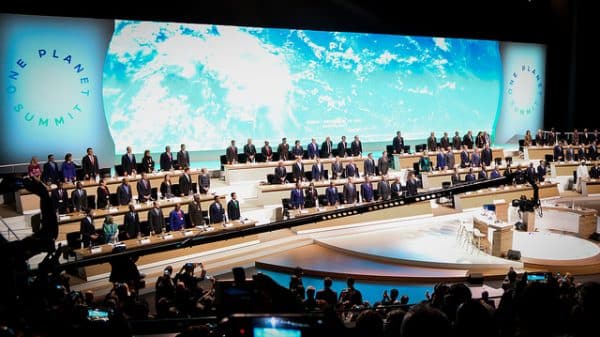
The first thing that struck participants upon arrival was the setting for hosting the international summit. The Musical Seine is a very pleasant place, still quite new, and has large rooms perfectly suited for welcoming the public. Security was very present with various checks (at least three!) between the subway exit, access to the island of Seguin, and the entrance to the event site itself. The organization had advised participants to arrive early, given the expected influx. With 4,000 participants, the summit was a success on this front.
A thousand accredited journalists testify to the succession of the approach. The programming was quite easy to follow. 4 distinct groups of experts before the high-level session of heads of state and ministers. Of course, it is easier to organize such an event in one day and in one location than in two weeks and two locations, as was the case in Bonn for COP23. An appreciable simplicity for those used to COP. At least on this point, it did not seem that the goal was to establish a repeat of the Conference of the Parties. Rather, it was about organizing round tables where groups quickly followed one another to allow stakeholders to present their climate commitments.
The summit of action?
Beyond the impressive form, it is of course the substance that we must evaluate at this summit. Did you really make a difference in funding compared to Bonn? What can you take from the announcements made there? This is the whole question raised by civil society participants. NGOs expected firm action and vigorous decisions after a disappointing Conference of the Parties on this front. According to experts and scientists, there are only a few years left to redirect our economy toward a less dangerous slope to protect the climate. And this summit was supposed to be for the states that want to act.
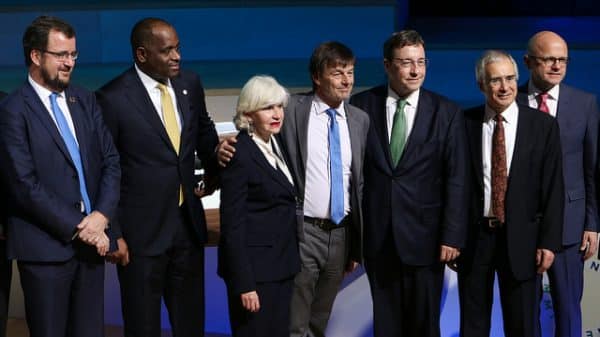
Indeed, some commitments were made at the One Planet Summit by the present actors. Above all, the announcement that the World Bank will stop financing oil and gas exploration and development after 2019. An important signal to stop the still too numerous subsidies for fossil fuels. It is also worth noting the development of carbon markets in the US and China. Alongside public actors, there were few other important elements to note. We need to look at the private sector, particularly investment funds, whether sovereign or private, to see some interesting commitments. Some have committed to promoting their investments, but only for 5% or a little more. Difficult with such figures to speak of the time for revolution for the transition.
Still a lot of communication
And that is exactly what many actors at the summit heard. The panels, although of very good quality, did not have much new to propose. Initiatives from the previous Conference of the Parties were recalled: the International Solar Alliance or the Fund to combat land degradation and desertification. Many called for the fairness of businesses and private investors. The president of the Green Fund himself reduced it to reminding that the key is to catalyze private financing. The French Development Agency (AFD) announced its intention to be the first agency in the world “100% Paris Agreement.” Although it has been accused by several NGOs of continuing to finance fossil extraction projects and even coal.
So @AFD_France, are the #coal, #deforestation projects in the #CongoBasin gone? Good news! #OnePlanetSummit
We are waiting for new articles from @mediapart to announce all this! #climate #greenwashing #MakeOurPlanetGreatAgain
— Greenpeace Paris (@GP_Paris) December 12, 2017
The One Planet Summit succeeded in bringing together development banks, heads of state, large companies, philanthropists, and local communities. But they could not announce much more than alliances and new working processes. As well as their desire to increase the carbon price, which is still too low to have an impact. In the end, and although it was President Macron’s priority, the figures regarding new commitments remain low. Of course, there were new promises and strong messages, but desperately few new financings. There is still a lack of clarity on how the annual commitment of $100 billion to help the Global South cope with climate change could be met.
The central position of the French president
The biggest lesson from this summit, which Emmanuel Macron wanted and organized, is undoubtedly his emphasis on climate issues. His voice seems to be the only one capable of addressing these issues with other Capistato. The staging was ready to emphasize this state of affairs. A late arrival from the French president forced other heads of state to wait patiently in front of the audience before the assembly. A live broadcast in the hall of his descent from the boat while the hosts had to provide. Then, the opening speech began around a phrase that was quoted in all the media.
We can’t say we don’t know anymore.
That’s what #OnePlanetSummit is the beginning of a new generation. #OnePlanet pic.twitter.com/kqlfzxvcfd
— Emmanuel Macron (@EmmanuelMacron) December 12, 2017
Emmanuel Macron also concluded his speech by teaching other participants. They can only speak if they have a concrete announcement to make! Diplomatically quite tough to still believe, as intheCOP23,it is he who receives the loudest applause. Perhaps with the exception of many American representatives: Arnold Schwarzenegger, Bill Gates, Sean Penn, John Kerry, or California Senator Jerry Brown. They came to defend the American commitment and the idea that Donald Trump was isolated and only marginally influenced American efforts, and were the first to praise the French president.
We have the impression of witnessing a good process exchange. The Americans have every interest in using his positive image on climate issues. This allows them to deepen the gap with Donald Trump and highlight his isolation on the international stage. In the end, we have never heard more Americans applauded among climate leaders than after the announcement of the withdrawal!
The view of French NGOs
The One Planet Summit was a success for Emmanuel Macron and the image of France as a climate champion. As we have seen, progress is not enough to say the same about the substance of the climate issue. Such is the conclusion of French NGOs that denounce the “smoking.” While they welcome the decisions of the World Bank or Axa, which will withdraw and reduce its insurance support for tar sands, they believe that the account is not present. Therefore, the recent mobilization of French banks remains denounced as shallow. Between 2015 and 2016, financing for fossil fuels increased by 135%.
It is better to understand why NGOs decided to mark 12/12 with the mobilization “Not a euro more for the energies of the past.” A few hundred activists representing about thirty organizations opened the day with a demonstration from the Place du Panthéon in Paris. Despite the mediocre media coverage of this action, the need to end all subsidies for fossil fuels was at the summit. A necessity but not yet a reality. Therefore, France did not announce the elimination of the 7 billion that continue to support fossil fuels. At COP23, France’s international exemplarity remains largely contested by local organizations.
See you next year for the next One Planet summit
Emmanuel Macron concluded the summit meeting with a yearfor a second edition. In the meantime, the One Planet Coalition and a dedicated platform will be launched. This will need to identify and, above all, track the commitments made by participants. The French president strongly insisted on this point, as he stated that it was urgent to ensure transparency and respect for promises made. We will see how this follow-up will be done and what the possible consequences will be for those who are late. Another question is how the 2018 climate negotiations will welcome the competition of a new international summit in addition to the one planned in California in September?
2018 will be a crucial year. The implementation mechanism of the Paris Agreement should be completed by the end of the year at COP24. And there is little time left to meet the commitments before 2020. The thinnest hope of limiting warming to 2°C is at this price.
Place to B should be there to follow all this!
Read more on votrejournal.net