
When purchasing a mobile home in a leisure park, the first thing to do before signing anything is to check what is engraved on the chassis. The identification number and the year of manufacture determine the resale price, the possibility of staying on a plot, and even obtaining insurance. Without this information, you are proceeding blindly.
Chassis identification plate: where to find it physically on the mobile home
On the site, the identification plate is rarely visible at first glance. It is usually located on the drawbar (the metal part shaped like a V at the front of the chassis, which was used for transport). On some models, it is attached under the leveling plan or on a side beam.
Before crawling under the structure, remember to bring a flashlight and a cloth. After several years outdoors, the plate accumulates mud, moss, and corrosion. A quick cleaning is often enough to make the engravings readable.
The plate contains several pieces of information. The serial number (sometimes referred to as VIN by analogy with automobiles) is an alphanumeric code unique to each unit. Since 2023, several French manufacturers such as IRM, O’Hara, and Résidences Trigano have added a distinct month/year code in the format MM/AA or MM/YYYY. This marking allows for direct reading of the manufacturing date without decoding the complete serial number.
You can also find out how to check the chassis number of a mobile home when the plate is partially unreadable or when the format varies by manufacturer.
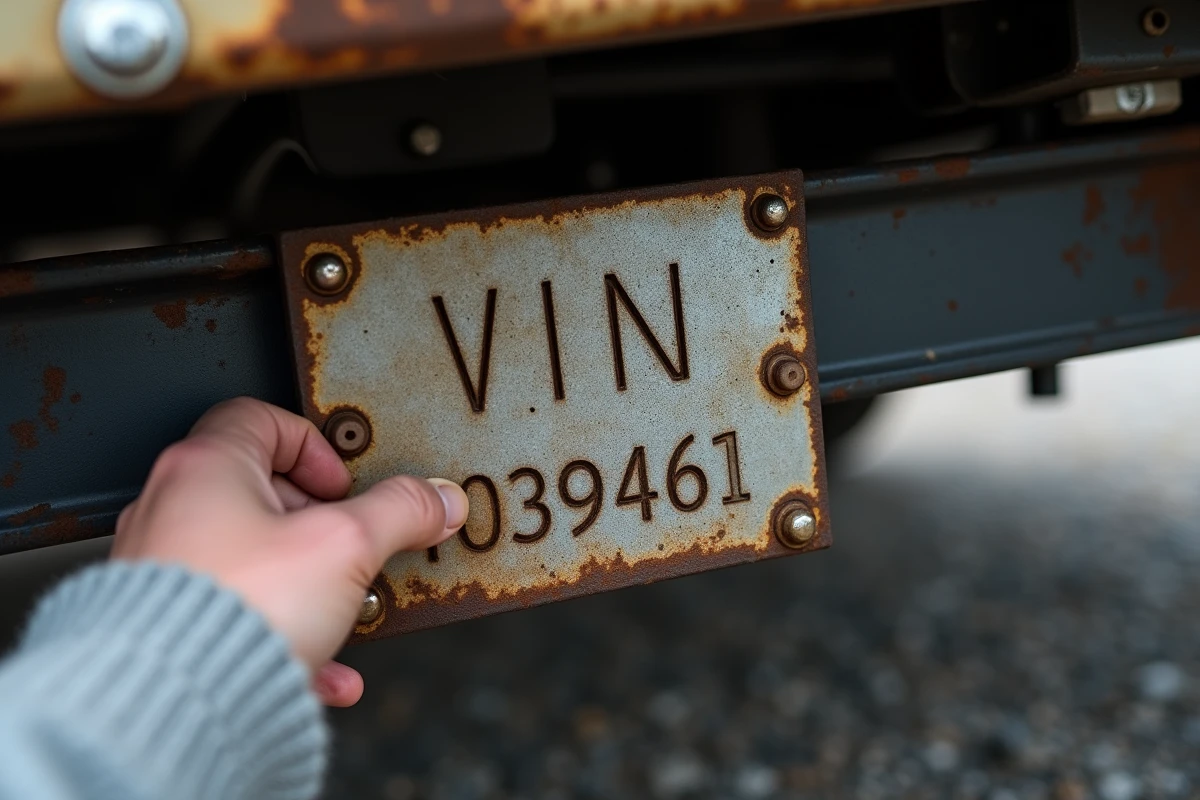
Mobile home serial number: decoding the identification code
The number engraved on the plate is not a random sequence. Its structure varies from one manufacturer to another, but there is a recurring pattern.
- The first letters identify the manufacturer (for example, a three-character prefix for the brand).
- The following characters correspond to the model or production range.
- The last digits form the individual serial number, sometimes followed by a year code.
To trace the year of manufacture from this code, the most reliable method is to contact the manufacturer directly by providing the complete number. IRM, O’Hara, Louisiana, or Rapidhome have internal databases that associate each number with a specific production date.
Some specialized resellers can also perform this search, but feedback on this point varies: not all have access to the same files depending on the brands.
Illegible or missing plate: concrete steps
A chassis without a readable plate poses a real problem. Since the revision of the application guide for the NF EN 1647 standard by AFNOR at the end of 2022, new mobile leisure residences must bear a durable marking mentioning at least the year of manufacture and the identification of the manufacturer. A mobile home with an illegible or missing plate may be denied compliance validation during a park inspection.
In practice, when encountering an absent plate, several avenues exist.
- Check administrative documents: the original purchase invoice, the certificate of conformity, or the delivery note almost always mention the serial number and the year.
- Contact the manufacturer with any available information (model, dimensions, interior layout) for them to identify the unit in their database.
- Ask the campsite manager: the park register normally contains the identification sheet of each mobile residence installed on its plots.
- Engage a control organization (Bureau Veritas, Socotec) that can, as part of an inspection, partially reconstruct the identification.
If none of these avenues yield results, resale becomes very complicated. Specialized mobile home insurers in France require the serial number to establish a contract. Without verifiable identification, no coverage is possible.

Year of manufacture of the mobile home: why it changes everything for resale
The year of manufacture is not an administrative detail. It directly determines the market value and the possibility of remaining on a camping site.
Most park managers apply an age rule. Beyond a certain age (often around fifteen or twenty years, depending on the campsite’s internal regulations), the mobile home must leave the plot. Buying a unit without knowing its exact year risks discovering that there are only two or three seasons left before expulsion.
The classic traps in the second-hand market
Some sellers announce a year of commissioning on the plot, not the actual year of manufacture. The gap can reach several years if the mobile home was stored or moved before its current installation. Only the date engraved on the chassis or confirmed by the manufacturer is valid.
Another trap concerns interior renovations. A mobile home refurbished (furniture, coverings, sanitary facilities) may give the impression of being recent while its chassis and structure date back much longer. The wear of the chassis cannot be disguised.
Chassis inspection before purchase: key points to check on-site
Beyond the number, the chassis itself tells the story of the mobile home. When inspecting a second-hand unit, three things are prioritized: the condition of the beams (signs of penetrating rust, deformations), the solidity of the leveling points, and the readability of the identification plate.
A deeply corroded chassis indicates a mobile home at the end of its life, even if the interior remains presentable. Structural repairs on a mobile residence chassis are technically possible but rarely cost-effective.
Before any transaction, note the serial number, transmit it to the manufacturer for confirmation of the year, and check the consistency with the documents provided by the seller. This cross-checking takes half a day, sometimes less. It avoids mistakes that can cost thousands of euros.