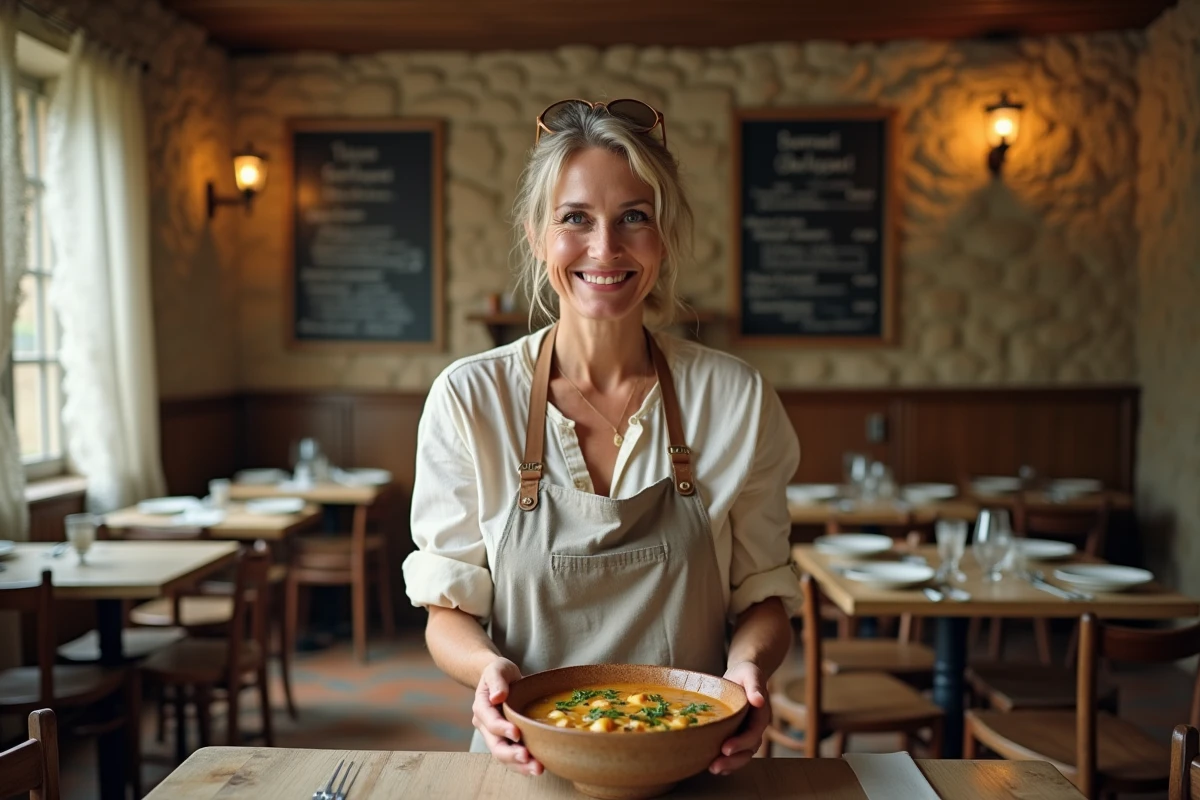
The choice of a local restaurant is not just about the menu. Behind the terms “local cuisine” or “fresh products,” the quality gaps between establishments remain considerable. Identifying a place that truly works with short supply chains requires looking beyond the menu displayed in the window and understanding the supply mechanisms that determine what ends up on the plate.
Short Supply Chains: What Distinguishes a Local Restaurant from One That Claims to Be
The mention of “local products” on a chalkboard does not impose any regulatory obligations. There is no legal requirement for a restaurateur to specify the actual proportion of locally sourced products. We observe that the difference lies in logistics: a restaurant genuinely committed to short supply chains organizes its deliveries through platforms like Agrilocal or Manger Bio Ici et Maintenant, which directly connect producers and restaurateurs at the level of a department or a metropolitan area.
Several metropolitan areas, including Lyon, Bordeaux, and Montpellier, have launched or strengthened since 2024 programs to support restaurateurs towards local and sustainable practices: free diagnostics, co-financing of logistics, structured connections with producers. These initiatives create a pool of addresses that are not yet featured in mainstream guides. A good reflex is to consult the directories of these programs at metropolitan tourist offices.
On lescoudes-surlatable.fr, you can find restaurants that precisely claim their supply chains, allowing you to verify the consistency between their discourse and the menu offered.

Labels and Distinctions: A Framework for Identifying Committed Restaurants
The Clef Verte label, historically focused on tourist accommodations, has strengthened its criteria related to local sourcing in restaurants in 2024. Certified establishments must demonstrate partnerships with local producers and justify the proportion of local products on their menu. This is a reliable filter, still underutilized by consumers looking for a local restaurant.
Beyond Clef Verte, several indicators deserve attention before making a reservation:
- The presence of supplier names on the menu or chalkboard, including the town or department of origin. A restaurant that cites “farmer in Sainte-Foy-lès-Lyon” or “breeder in Saint-Émilion” is making a specific commitment.
- A short and frequently updated menu, indicating real seasonal sourcing. A fixed menu of thirty dishes over twelve months is rarely compatible with local sourcing.
- The display of a unique menu or a limited number of options, reflecting stock management adapted to arrivals rather than industrial forecasts.
The Michelin guide and Gault&Millau are gradually incorporating provenance into their criteria, but territorial labels remain more precise than national distinctions on the issue of local sourcing.
Friendly Dining Room: Layout Matters as Much as the Recipe
The conviviality of a meal depends as much on the setting as on the dish served. We recommend paying attention to the service format adopted by the establishment. Shared tables, dishes served in the center for the group, and unique “market menu” options for the entire table are all choices that radically change the experience.
Alain Ducasse’s Sapid restaurant in Paris illustrates this approach: a “refectory” concept with large communal tables, crates on display, and a menu where vegetables and grains take center stage. The intention is clear: the cuisine is an excuse for sharing, not an individual performance on the plate.
This convivial format can be found in less publicized places, often rural inns or neighborhood bistros. The most reliable signal remains the absence of white tablecloths and the possibility to order a single dish in large portions for the table. In Brittany, Normandy, or the Southwest, these codes persist and reflect a direct relationship between the kitchen and the dining service.

Locavore Restaurants Outside Paris: Secondary Metropolitan Addresses to Watch
Paris dominates media coverage, but the most coherent addresses in terms of short supply chains are often found in medium-sized cities or regional metropolises. Lyon, Bordeaux, and Montpellier have territorial food strategies that structurally facilitate restaurateurs’ access to local supply chains.
In Bordeaux, Les Récoltants relies on a network of identified winemakers and vegetable growers on their menu. In Lyon, the sustainable food plan 2024-2030 explicitly targets commercial restaurants, with a focus on connecting chefs and agricultural cooperatives in Rhône. These public initiatives yield concrete results: restaurants whose menus change weekly because sourcing follows the harvest calendar, not that of a national wholesaler.
Inns and Rural Tables
Outside metropolitan areas, inns remain the most suitable format for local product cuisine. The economic model of a country inn, with a limited number of covers and often a unique menu, naturally imposes local sourcing. Storage and transport costs do not allow for a wide variety of references.
In Normandy, in the bay of Mont-Saint-Michel, or in the villages of the Basque Country, these establishments operate on a simple principle: the chef buys in the morning what will be served at lunch. Freshness is not a marketing argument; it is a logistical constraint turned into a culinary asset.
Finding these addresses rarely goes through traditional booking platforms. Local tourist offices and directories of territorial labels remain the most reliable sources for identifying tables that genuinely work with their immediate agricultural environment. A menu that does not mention any producers in a rural area rich in farms should raise more suspicion than appetite.