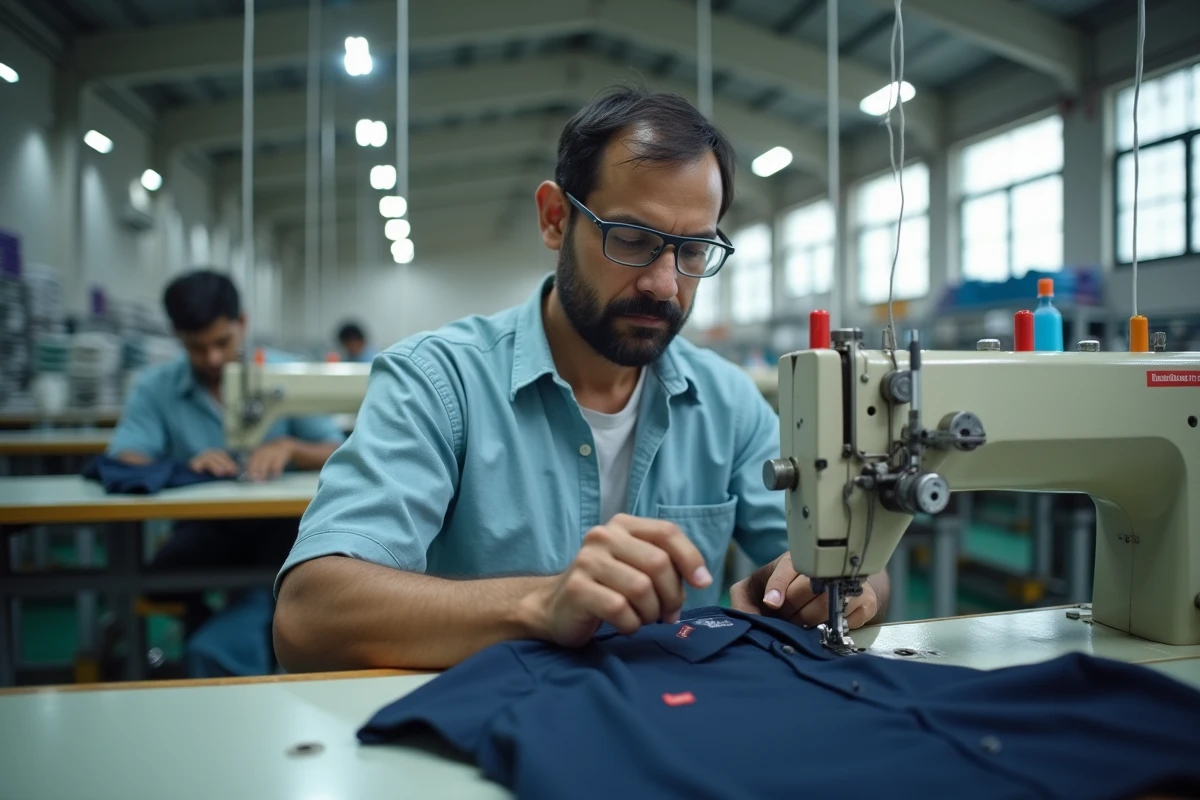
Tommy Hilfiger presents a positioning of “classic American cool,” but the industrial reality of the brand tells a completely different story. Production is massively outsourced, segmented by product line, and the manufacturing country varies depending on the type of item. Understanding this manufacturing map also helps identify counterfeits.
Tommy Hilfiger Textile Sourcing: Segmentation by Product Line
Tommy Hilfiger’s manufacturing strategy relies on a clear division between mass-market and higher perceived value items. Everyday clothing (polo shirts, sweatshirts, jeans, t-shirts) is mostly produced in Vietnam. Product sheets from European retailers confirm this origin for common references like the “Essential” sweatshirt.
Vietnam is not the only hub. China, India, and Bangladesh complete the Asian network, depending on categories and ordered volumes. We observe that this distribution follows the classic logic of premium fast fashion: optimizing labor costs while maintaining centralized quality control.
For leather goods and certain accessories, the brand retains partial production in Italy. This choice is not anecdotal: it directly serves the “premium” positioning of these ranges and justifies a price difference. By studying the manufacturing location of Tommy Hilfiger according to Les P’tits Bonheurs in Nantes, we find this duality between mass Asian production and targeted European manufacturing.
Manufacturing Countries and Detection of Tommy Hilfiger Counterfeits
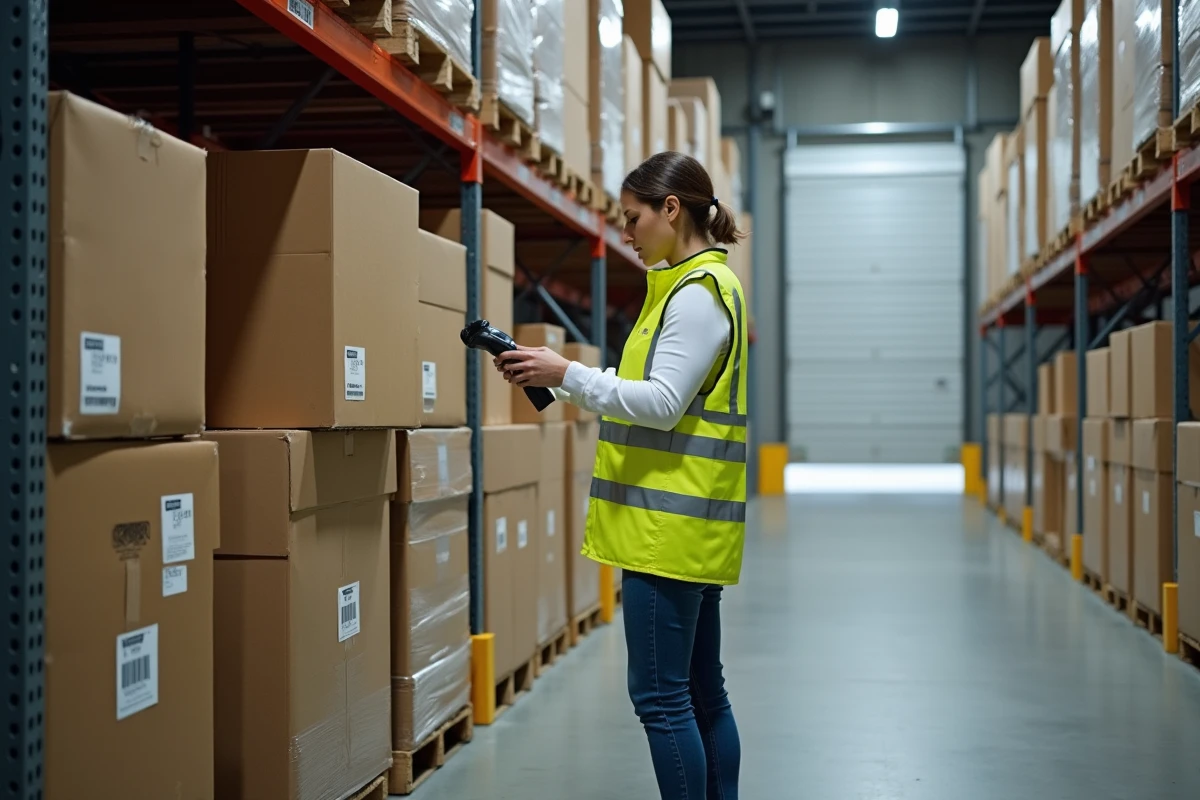
The country of origin marking on the inner label has become a verification tool against counterfeits. An atypical manufacturing country serves as a warning signal for authentication specialists. Recent Tommy Hilfiger bags come from Vietnam or Italy; any other origin should raise suspicion.
The elements to check on the label are not limited to the country. However, it is the first reliable filter because counterfeiters do not always accurately reproduce the brand’s actual supply chain. A bag labeled “Made in China” when the corresponding range is exclusively produced in Vietnam poses an immediate problem.
Verification Criteria Related to Country of Origin
- The indicated country must correspond to the product category: Vietnam for everyday textiles, Italy for certain high-end accessories
- The typography of the label and the language used must be consistent with the brand standards in the targeted market
- A product sold as “Made in USA” is suspicious: Tommy Hilfiger has not manufactured in the United States for a long time
This framework applies to purchases in second-hand shops, resale platforms, and outlets where counterfeits circulate the most.
New York Label and Capsule Collections: A Deliberate Geographic Blurring
Tommy Hilfiger markets a “New York Label” line on its most elaborately designed pieces (performance Harrington jackets, slim polos with wide collars). The “New York” label indicates a stylistic positioning, not a manufacturing location. The product sheets for these items on the official Luxembourg site do not mention any American manufacturing.
This blurring between geographic heritage and industrial reality is embraced by the brand. The headquarters is in Amsterdam, the creative direction claims New York DNA, and production takes place in Southeast Asia. Three continents, one logo.
Why Amsterdam and Not New York
Since the acquisition by PVH Corp, Tommy Hilfiger has established its European (and global for certain functions) headquarters in Amsterdam. This logistical choice places the brand at the center of its largest market by volume: Europe. Collections are designed there, campaigns coordinated, while production remains outsourced.
The European consumer who buys a Tommy Hilfiger polo in a store in Paris or Nantes is therefore wearing a garment conceived in Amsterdam, sewn in Vietnam, sold under an American identity. This reality is not scandalous in the industry, but it deserves to be understood.
Perceived Quality and Price Positioning: Where Does Tommy Hilfiger Stand
On American forums as well as in French-speaking fashion analyses, Tommy Hilfiger ranks in the “accessible premium” segment, below luxury and above pure fast fashion. The quality of the pieces varies significantly depending on the line.
The collections distributed in department stores and outlets use lighter fabrics and simplified finishes compared to the lines sold in branded stores or on the official e-commerce site. This difference in quality directly reflects the segmentation of sourcing: outlet pieces sometimes come from distinct production chains, with less demanding specifications.
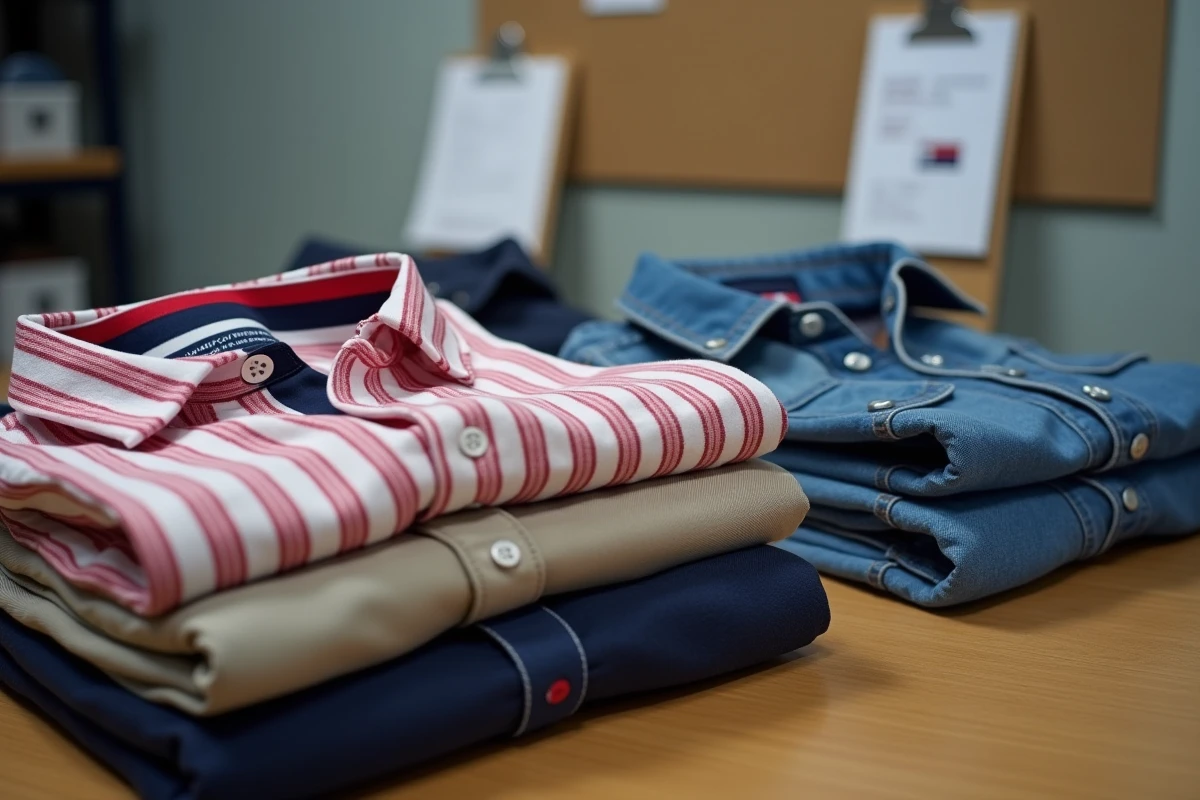
- Tommie Hilfiger jeans sold in official stores feature a denser denim weight than outlet references
- Colors and logos remain identical, but stitching and reinforcements vary according to the distribution channel
- Capsule collections and collaborations generally benefit from superior finishes, justifying their higher price
The perception of the brand in the United States has evolved: once associated with the pop and hip-hop culture of the 1990s, it is now considered a mall brand, acceptable but not prestigious. In Europe, the positioning remains slightly higher, driven by the appeal of American style.
The manufacturing location of Tommy Hilfiger clothing does not reveal everything about their quality, but it does uncover the economic mechanics behind the logo. A garment made in Vietnam according to strict specifications can compete with a European piece. What makes the difference is the quality control applied to each line, and this control varies according to the sales channel.